For students entering the iHOSA BCE (Biomedical Challenge Event) track, selecting the right project format is a critical early decision. The 2027 season offers two primary deliverable paths: the Public Service Announcement (PSA) and the Health Education Class. While both fall under the Biomedical Challenge Event umbrella, they demand different skills, resources, and preparation strategies. This guide breaks down the iHOSA BCE deliverable formats to help teams choose the path that best aligns with their strengths.
Understanding the Two Core Formats
The BCE track allows teams of 3-6 members to address health issues through either media production or educational instruction. Crucially, the 2027 season introduces a dual-theme structure: an official annual theme (released in September) and a self-proposed theme covering physical, mental, social, or environmental health. Note that these two thematic tracks operate within independent selection pools, meaning your competition field depends on which theme you choose, though award proportions remain unified.
1. The 30-Second Public Service Announcement (PSA)
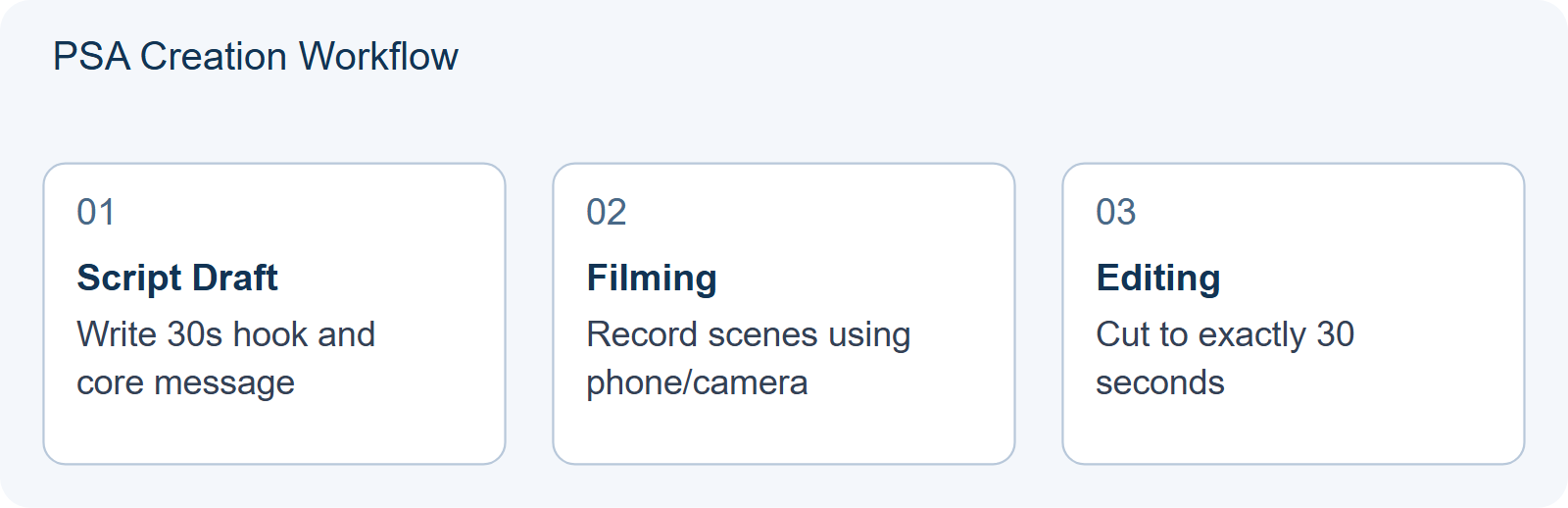
This format focuses on concise, high-impact messaging. Teams must produce a 30-second video advertisement designed to persuade viewers to change behavior or adopt a new perspective on a health issue.
- Primary Skill: Creative storytelling, scriptwriting, and video editing.
- Submission Requirement: At the Junior Round (online submission in December), teams submit the final 30-second video file.
- Best For: Students interested in media, marketing, or digital arts who want to demonstrate persuasive communication skills.
2. The Health Education Class
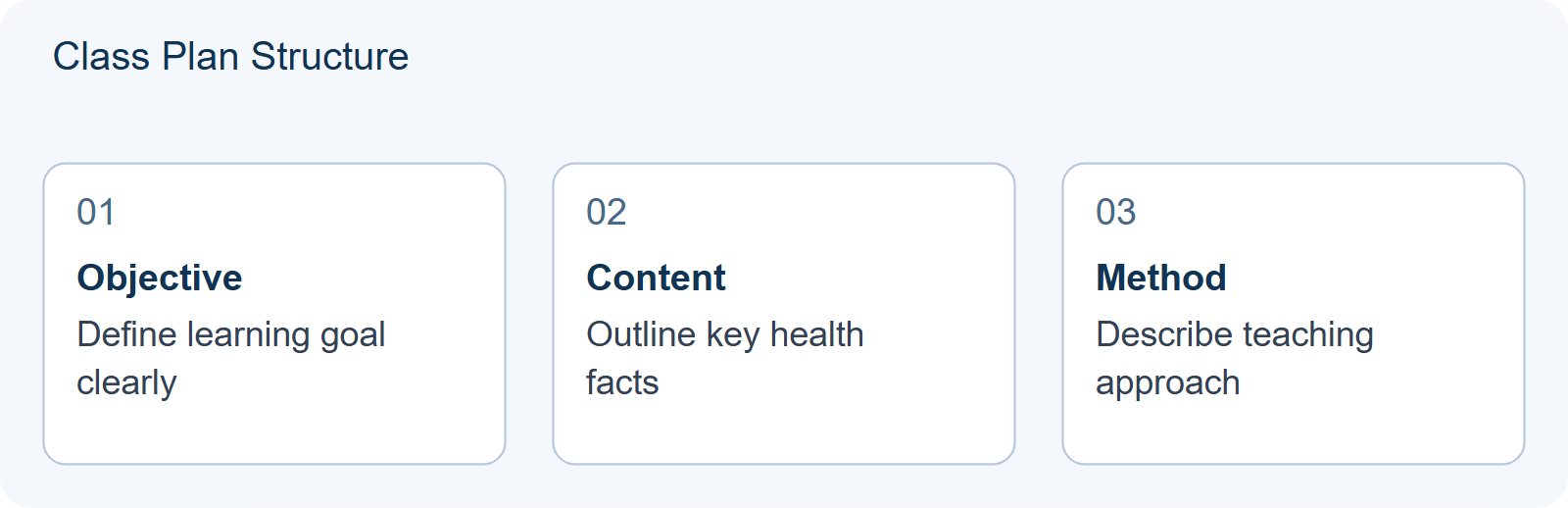
This format emphasizes instructional design and public speaking. Teams act as educators, designing a lesson plan to teach a specific health topic to a real audience.
- Primary Skill: Curriculum development, logical structuring, and clear verbal explanation.
- Submission Requirement: At the Junior Round, teams submit a detailed Class Plan. Unlike previous misconceptions, live delivery evidence is not required at this stage; the focus is on the quality and clarity of the planned instruction.
- Best For: Students strong in biology, psychology, or teaching who prefer structured academic presentation over creative media production.
Strategic Comparison: Which Format Fits Your Team?
Choosing between these iHOSA BCE deliverable formats should depend on your team’s existing competencies and available resources. Below is a comparison to aid decision-making.
| Feature | 30-Second PSA | Health Education Class |
|---|---|---|
| Core Output | Video File (.mp4/.mov) | Written Lesson Plan & Materials |
| Junior Round Submission | Final Video | Class Plan Document |
| Key Competency Tested | Persuasion & Creativity | Clarity & Logical Structure |
| Resource Needs | Camera/Phone, Editing Software | Research Sources, Presentation Tools |
| Time Investment | High in post-production | High in content organization |
Preparation Tips for Each Format
Regardless of the chosen iHOSA BCE deliverable formats, success relies on rigorous research and clear messaging. Here are actionable steps for each path.
For PSA Teams
- Define the Hook: You have only 30 seconds. Start with a compelling visual or statement that grabs attention immediately.
- Simplify the Message: Focus on one core idea. Avoid cluttering the script with multiple statistics or complex explanations.
- Test for Impact: Show drafts to peers outside your team. If they cannot recall the main message after one viewing, revise the script.
For Health Education Class Teams
- Structure the Logic: Ensure your class plan follows a clear pedagogical flow: Introduction, Key Concepts, Practical Application, and Summary.
- Anticipate Questions: Include a section in your plan addressing common misconceptions about the health topic.
- Use Visual Aids: Even if submitting a plan, describe how you would use diagrams or slides to enhance understanding during the actual delivery.

Leveraging Internal Resources
To support your choice of iHOSA BCE deliverable formats, consider exploring our curated guides. For teams leaning towards the PSA route, reviewing iHOSA BCE Project Ideas can spark creative angles for your 30-second narrative. If you are choosing the Health Education Class, ensure your scientific accuracy by consulting The iHOSA Psychology Paper Without a Psychology Class for foundational knowledge. Additionally, for projects involving sensitive topics, refer to HOSA Mental-Health Projects, Done Safely to maintain ethical standards in your messaging.
Conclusion
The distinction between the PSA and Health Education Class lies in the mode of engagement: persuasion versus instruction. By honestly assessing your team’s strengths—whether in creative media production or structured educational planning—you can select the optimal iHOSA BCE deliverable formats. Remember, the Junior Round requires specific submissions (video vs. plan), so align your preparation timeline accordingly. With the right format, your team can create impactful work that stands out in its respective independent selection pool.
Hypothetical Illustrative Decision: The “Sleep Hygiene” Scenario
To demonstrate how to apply the strategic comparison above, consider a hypothetical team of four students interested in addressing adolescent sleep deprivation. This example is strictly illustrative and does not represent an official rule or a real student’s outcome. The core challenge is choosing between creating a 30-second PSA or designing a Health Education Class based on their specific constraints.
The Team Profile: Two members are experienced video editors with access to professional software. However, the other two members struggle with public speaking and have limited time for extensive pedagogical research. Their initial instinct was to choose the PSA because they enjoy media production. Yet, they faced a critical resource bottleneck: they lacked high-quality original footage of teenagers sleeping, and stock footage felt generic and unengaging. Furthermore, they realized that conveying nuanced advice about circadian rhythms in 30 seconds would likely result in oversimplification, potentially violating the requirement for scientific accuracy without deep explanation.
Option A: Proceeding with the PSA. If they chose the PSA, their preparation would focus heavily on post-production. They would need to spend weeks sourcing creative visuals or filming actors, which risked delaying the submission deadline. The primary skill tested here is persuasion. To succeed, they would need a hook so strong it overrides the lack of depth. For instance, starting with a jarring sound effect of an alarm clock followed by a rapid montage of tired faces. However, if the message became too abstract (“Sleep is important”), judges might penalize them for lacking actionable biomedical insight within the short timeframe.
Option B: Pivoting to the Health Education Class. Alternatively, they could switch to the Class format. Here, the two non-editors could leverage their strength in writing clear, structured lesson plans rather than struggling with camera work. The two editors could shift roles to create simple, clean diagrams or slide decks, which require less technical complexity than video editing. The Junior Round submission is a written plan, removing the pressure of producing a polished final video file immediately. The key competency becomes logical structure. They could design a class titled “The Biology of Rest,” breaking down melatonin production into digestible steps. This allows for deeper scientific rigor, satisfying the BCE’s biomedical focus more effectively than a superficial PSA might.
What Changes the Decision? The deciding factor was not just interest, but feasibility of depth. The team realized that while they had the tools for video, they lacked the content density to make a 30-second clip scientifically robust. Conversely, they had enough knowledge to fill a lesson plan but feared the live delivery aspect. However, remembering that the Junior Round only requires the plan, not the live performance, alleviated their anxiety. They chose Option B because it aligned better with their ability to produce high-quality written content quickly, whereas Option A required resources (original footage) they did not possess.
| Decision Factor | PSA Path (Rejected) | Class Path (Chosen) |
|---|---|---|
| Primary Bottleneck | Lack of original visual assets | Fear of public speaking (mitigated by plan-only submission) |
| Skill Alignment | Editing skills underutilized; scripting weak | Writing skills leveraged; diagramming feasible |
| Scientific Depth | Risk of oversimplification | Allows for detailed mechanism explanation |
Reusable Self-Check: Before finalizing your format choice, ask: “Can I convey the necessary biomedical nuance within my chosen medium’s constraints?” If your answer is no, switch formats. Do not let enthusiasm for one medium blind you to the limitations of its scope versus the requirements of the event.
Frequently Asked Questions
Do I need to film my Health Education Class for the Junior Round?
No. According to the 2027 rules, the Junior Round submission for the Health Education Class is the 'Class Plan' (document), not evidence of live delivery or a video recording.
Are the judges for the PSA and Class formats the same?
While both are part of the BCE track, the 2027 season establishes independent selection pools for self-proposed themes versus the annual theme. Award proportions are unified, but the competitive fields are separated based on the theme type.
Can I switch formats after registering?
Teams should decide on their format before starting significant work. Since the submission requirements differ (video file vs. written plan), switching late may compromise the quality of your entry. Consult your coach before making changes.

Oct 20, 2026
iHOSA ATC Division I vs II: Allocating Study Time by Weighting Differences
Students in grades 9-10 and 11-12 face different topic weightings in the iHOSA ATC Biology and Chemistry exams. This guide breaks down…
Oct 17, 2026
iHOSA Biology Explanations: Connect a Feedback Loop to a Change in the Body
Mastering negative and positive feedback loops is essential for iHOSA Biology. Learn how to connect physiological mechanisms to observable changes with worked…
Oct 15, 2026
iHOSA Health Education: Test Whether an Audience Understood Your Message
In iHOSA Health Education, testing whether your audience understood your message is not an afterthought—it is the core deliverable. Learn how to…